I remember the first time I stumbled upon a KEMCO game on the app store years ago. I was looking for something that felt like the old Super Nintendo games I played as a kid, something with turn-based battles and a story about saving the world. That is when I found Alphadia. It did not have the massive budget of a Square Enix title, and it did not have groundbreaking graphics that pushed my phone to its limits. Instead, it had a certain kind of soul that is hard to find in modern gaming. It felt familiar, like coming home after a long trip. For anyone who loves Japanese Role-Playing Games, or JRPGs, the Alphadia series is a fascinating journey through both modern convenience and retro nostalgia.
What is the Alphadia Series All About?
At its core, Alphadia is a series of fantasy role-playing games developed by Exe-Create and published by KEMCO. If you have spent any time in the mobile gaming world, you probably know those names. They are famous for releasing a staggering number of RPGs, but Alphadia is often considered their flagship franchise. The series usually follows a group of heroes who are caught in the middle of a conflict involving “Energi.” In this world, Energi is not just a fancy word for magic. It is a fundamental force of nature that powers the world, but it is also a source of great political strife. The games often deal with themes of war, the environment, and what it means to be human, even if those humans are using magical powers to fight mechanical soldiers.
One thing that makes Alphadia stand out is how consistent it is. When you pick up an Alphadia title, you know exactly what you are getting. You get a world map to explore, towns to visit, NPCs to talk to, and dungeons filled with monsters. While some might call this predictable, I find it incredibly refreshing. In an era where every game is trying to reinvent the wheel with complicated open worlds or confusing live-service mechanics, Alphadia stays true to the roots of the genre. It focuses on telling a character-driven story through simple dialogue and strategic combat. It is the kind of game you can play for twenty minutes on a lunch break or for five hours on a rainy Sunday afternoon.
Understanding the Energi System
The most unique part of the Alphadia universe is the Energi system. Most RPGs use a standard “MP” or mana system where you just cast spells until a bar runs out. In Alphadia, things are a bit more interesting. Characters have different elemental affinities, such as fire, water, light, or shadow. As you level up and use your Energi, you learn new skills and can even combine elements to create devastating special attacks. I have always appreciated how this encourages the player to think about their party composition. You cannot just pick your four favorite-looking characters and hope for the best. You need to balance your elemental strengths to survive the tougher boss fights.
In my experience, the Energi system also adds a lot of weight to the story. The games often talk about the “Energi War,” a massive historical conflict that nearly destroyed the world. This makes the magic feel like more than just a gameplay mechanic. It feels like a dangerous tool that the characters have to respect. When you are out in a dungeon and your healer is low on Energi, the tension rises because you know that resource is finite and precious. This connection between the lore of the world and the buttons you press during combat is what makes a good RPG great, and Alphadia does this better than most budget-friendly titles.
The Visual Shift: From 2D to 3D and Back Again
If you look at the history of Alphadia, you will see a strange and interesting evolution in how the games look. The early titles were strictly 2D, using sprite work that would look right at home on a Game Boy Advance. Then came Alphadia Genesis, which was a huge turning point for the series. It introduced 3D models for the battle sequences while keeping 2D sprites for the world exploration. I have to be honest here; at first, I was not a fan of the 3D shift. The models felt a bit stiff compared to the charming pixel art. However, as I played more, I realized it allowed for much more dynamic camera angles and flashy special effects that the 2D engines just could not handle.
Then we have the more recent entries like Alphadia Neo. This game went back to a more refined 2D style but with high-definition assets that look beautiful on modern screens. It seems like the developers realized that their core audience loves that classic look. This “back and forth” with art styles shows that the team is always experimenting. They want to see what resonates with the fans. Personally, I think the current high-res 2D style is the sweet spot. It captures that 16-bit nostalgia but doesn’t feel like it is stuck in the past. The character portraits are expressive, and the environments are colorful, which is all you really need to get lost in a fantasy world.
Why Alphadia is the “Comfort Food” of RPGs
I often describe these games as “comfort food.” You know how sometimes you don’t want a five-course gourmet meal, you just want a really good grilled cheese sandwich? That is Alphadia. These games are not trying to compete with Final Fantasy VII Rebirth or Elden Ring. They know their lane and they stay in it. They provide a solid, traditional experience for a fraction of the price of a AAA game. For a few dollars, you get a 20 to 30-hour adventure with a complete story and satisfying progression.
There is also a great sense of accessibility here. The menus are easy to navigate, the tutorials are straightforward, and the games usually include quality-of-life features like auto-battle or adjustable encounter rates. As someone who has grown older and has less time to spend grinding for experience points, I truly value these features. I can speed up the “trash mobs” to get to the next story beat or the next big boss. It makes the hobby of gaming feel less like a second job and more like the fun escape it is supposed to be.
A Fair Critique: The Repetitive Nature
Of course, no game series is perfect, and I would be doing you a disservice if I did not mention the downsides. Because Exe-Create makes so many games, they often reuse assets. You might see the same monster design in three different games, or the sound effects might be identical across the entire franchise. If you play five KEMCO games in a row, you will definitely start to feel a sense of “déjà vu.” The plots also tend to follow similar tropes: a young man with a mysterious past, a princess on the run, and an ancient evil that is waking up.
However, I argue that this repetition is part of the charm for a specific type of player. It is like watching a long-running procedural TV show. You know the formula, and you are there because you like the formula. If you go into Alphadia expecting a narrative masterpiece that will change your worldview, you might be disappointed. But if you go into it looking for a solid adventure with likeable characters and a fun combat system, you will have a blast. The games don’t pretend to be something they aren’t, and there is a lot of honesty in that kind of game design.
Which One Should You Play First?
If you are new to the series, I highly recommend starting with Alphadia Genesis. It is widely available on almost every platform, including Steam, PlayStation, and mobile. It serves as a great introduction to the Energi system and the overall tone of the series. If you want something that feels a bit more modern and polished, Alphadia Neo is another fantastic choice. It has some of the best character interactions in the series and a very satisfying loop of upgrading your gear and learning new skills.
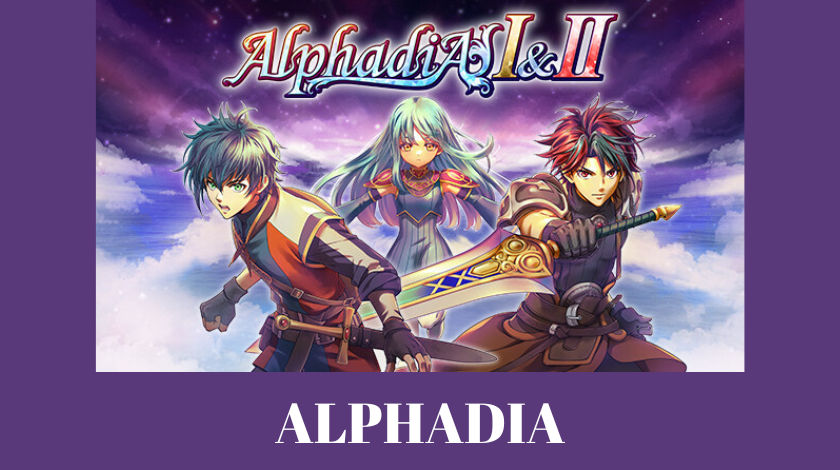
For the purists, the Alphadia I & II bundle is the way to go. These are remakes of the original games that started it all. Playing them allows you to see the foundations of the lore and how the world of Energi was first conceptualized. It is a bit more old-school in its difficulty, so be prepared for a bit of a challenge. Regardless of which one you pick, you are going to find a game that was clearly made by people who love the JRPG genre.
Final Thoughts on the Legacy of Alphadia
The Alphadia series has managed to survive for over a decade in a very competitive market. It has done this by being consistent, affordable, and genuinely fun. It reminds us that games don’t need to have a hundred-million-dollar budget to be worth our time. Sometimes, all you need is a good story, a fun combat system, and a world that feels worth saving. My time spent in the lands of Alphadia has been filled with memorable boss fights and charming character moments, and I think any fan of the genre owes it to themselves to give it a try. It is a humble series, but it has a big heart, and in the world of modern gaming, that is something truly special.
Conclusion
The Alphadia series is a testament to the enduring power of the classic JRPG. By focusing on the “Energi” system and maintaining a steady stream of accessible, high-quality titles, KEMCO and Exe-Create have carved out a unique niche. Whether you are playing on your phone during a commute or on your console at home, these games offer a reliable and enjoyable escape into a world of magic and adventure. They are the perfect entry point for newcomers and a warm, nostalgic embrace for veterans of the genre.
FAQ
1. Do I need to play the Alphadia games in a specific order?
While many of the games share themes and lore regarding “Energi,” most of them feature standalone stories or are grouped into sub-series like Genesis. You can generally start with any game, but playing Alphadia I & II first gives you the most historical context.
2. Are Alphadia games difficult?
They are generally considered to be on the easier side of the RPG spectrum, especially with modern quality-of-life features like auto-battle. However, optional post-game bosses can provide a significant challenge for those who seek it.
3. Are there microtransactions in Alphadia?
Since many of these games started on mobile, some versions include a shop where you can buy special items or boosts using “KEMCO points.” However, these are almost always entirely optional, and the games can be fully enjoyed without spending an extra cent.
4. How long does it take to beat an Alphadia game?
On average, a single playthrough will take you between 15 and 25 hours. This makes them much shorter than massive games like Persona or Dragon Quest, which is great for players with busy schedules.
5. What platforms can I play Alphadia on?
The series is very accessible. You can find these games on Android, iOS, PC (Steam), Nintendo Switch, PlayStation 4/5, and Xbox.
About the Author